Make a list of what a product marketer actually controls and it's short. The product belongs to product management, the pipeline to sales and most channels to other marketing teams. Almost everything you ship depends on someone else saying yes. So the job starts with knowing whose yes you need, and what each of those people needs from you.
You sit at the hub of the wheel
PMMs work between a lot of teams. In PMA's 2025 survey, 88.8% said they work closely with product and 81% with marketing1. Bessemer's guide to building the function adds more spokes: customers, sales, engineering and analysts. It also says PMM lines up with demand generation, brand, field marketing and communications2. Real postings read the same way. Duolingo's posting for a Product Marketing Lead names Product, Brand, Performance marketing, Comms, Business Development and Analytics as partners3.
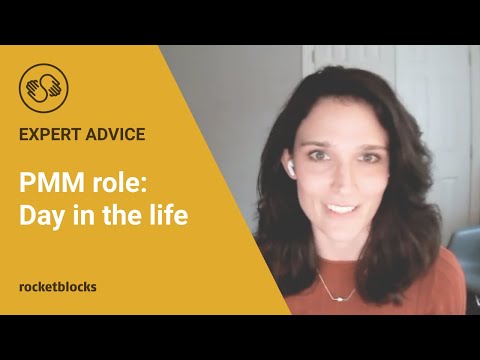 Play video: Day in the life of a product marketing manager, with Holly Watson
What each partner needs, and what you need back
Every one of these relationships is a trade. You give each team something it can use, and you need something back:
| Partner | What they need from you | What you need from them |
|---|---|---|
| Product (PM, design, engineering) | Customer and market insight, positioning, the launch plan | Roadmap visibility, early access, honest scope and dates |
| Sales | A pitch that works, battlecards, objection handling, training | What's happening in deals: wins, losses, objections |
| Demand generation and performance | Messaging, audiences, offers | Channel and campaign results |
| Brand and creative | Positioning and key messages | A consistent look and voice |
| Customer success and support | Release notes, onboarding content, FAQs | Adoption problems, churn reasons, feature requests |
| Analytics | The questions and the goals | Dashboards and experiment reads |
| Comms, analysts and partners | The narrative and launch moments | Coverage, outside credibility, reach |
The table is a summary built from the sources above and from 2026 job postings. One row comes with a caveat. Analysts come up in Bessemer's guide, and Lauchengco's evangelist job covers press and other outside voices, but analysts rarely show up as a full job of their own in postings.
How to get a yes from people who don't report to you
None of these teams reports to you. You can't assign sales a task or tell a PM what to build, so influence is how anything gets done. Lauchengco's advice is to bring product marketers into product planning and have them talk with their PMs often, because what ships and when inevitably changes4. Beyond that, three habits help:
- Trade, don't ask. Bring sales a win/loss insight before asking them to use your new deck.
- Show your evidence. "Six of the last ten lost deals cited setup time" moves a PM more than "customers want it easier."
- Close the loop. Tell people what happened with their input, or they stop giving it.
Common traps
- Talking only to the PM. Sales and support often hear about the market's problems before product does, because they talk to customers every day.
- Shipping enablement nobody asked for. Ask sales what's blocking deals before you build anything.
- Forgetting customer success. They own the customers who renew, and they know why people leave.
In an interview
Expect cross-functional questions such as walking through a project and your part in it, or describing a time you influenced another leader's decision. Pick stories where you changed someone's mind with evidence. Then say what you gave them in return, because that trade is how PMMs get things done without authority.
 Play video: How to get people to listen to you
Self-check: Your PM won't share the roadmap until it's final, and launch is six weeks out. What do you offer to get in earlier?
Something the PM can use right away: the top objections sales hears, recent win/loss findings, or a draft of how you'd position the feature. Trading insight first gives the PM a reason to bring you in early.